

Fuel-Efficient Boats: Saving Money and the Environment
2026-02-17T08:04
Fuel-Efficient Boats: Saving Money and the Environment
Boating is about freedom, but for many buyers, rising fuel prices and growing environmental concerns are shifting the focus toward something just as important: fuel efficiency. Whether you're planning weekend cruises on Long Island Sound or full days on the water fishing off the Atlantic coast, understanding how your boat burns fuel can save you thousands over time.
At Petzold’s Marine Center, we help buyers make smart decisions about long-term ownership. Here's what makes a boat fuel efficient and how your habits matter just as much as horsepower.
Why Fuel Efficiency Matters More Than Ever
Fuel efficiency is becoming a key factor in how people choose and use their boats.
With marine fuel prices continuing to rise and environmental responsibility top of mind for many boaters, choosing a fuel-efficient boat means lower running costs and less impact on the water.
Fuel efficiency is influenced by everything from hull shape and cruising habits to how much gear you load on board. Understanding the full picture helps buyers avoid surprises and enjoy their time on the water without draining their wallets.
What Makes a Boat Fuel Efficient?
Several factors work together to determine how efficiently a boat uses fuel. Some of these are baked into the design, others are entirely up to how the boat is used and maintained.
Hull design: Planing vs. displacement hulls move through water differently, affecting drag and fuel burn.
Engine setup: Newer outboards and four-stroke engines are significantly more fuel-efficient than older models.
Boat weight: Heavy boats require more power to stay on plane or reach speed.
Cruising speed: Wide-open throttle is a fuel killer. Most boats have an optimal fuel economy “sweet spot” in the mid-range RPMs.
Real-world use: Manufacturer specs often highlight ideal conditions. Real use involves current, wind, waves, and passengers.
Boat Types Known for Better Fuel Efficiency
Not every boat is built with fuel economy as the top priority, but some classes naturally burn less fuel based on how they’re used and designed.
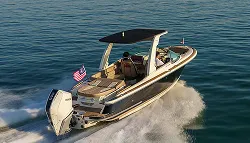
Fuel-Efficient Sport Boats
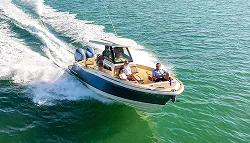
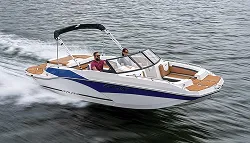
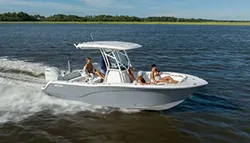
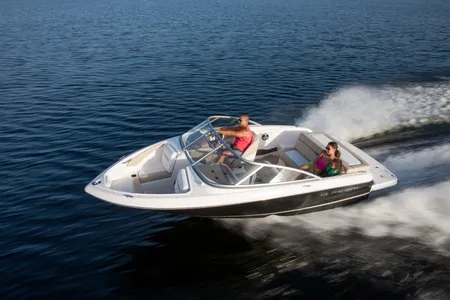
Modern sport boats with lightweight hulls and properly matched outboards can deliver surprising fuel savings. Many newer models, especially in the 18–24 ft. range, offer excellent miles-per-gallon when cruising at moderate speeds.
They’re a great fit for anglers who want range without sacrificing all-day runtime.
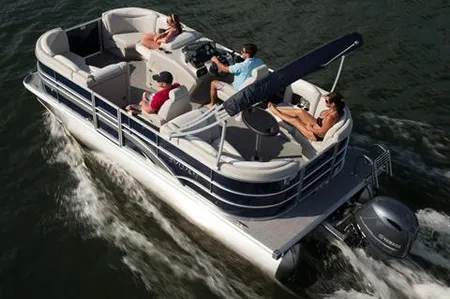
Fuel-Efficient Pontoon Boats
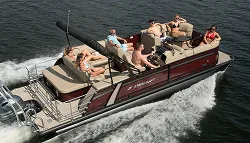
Today’s pontoon boats aren’t the gas guzzlers they used to be. With advances in engine pairing and multi-hull design, it’s possible to cruise comfortably at 18–25 MPH while sipping fuel compared to traditional hulls.
Slow cruising? Even better. You can cover a lot of ground on calm lakes or rivers without hitting the fuel dock every time out.
Fuel-Efficient Cruisers
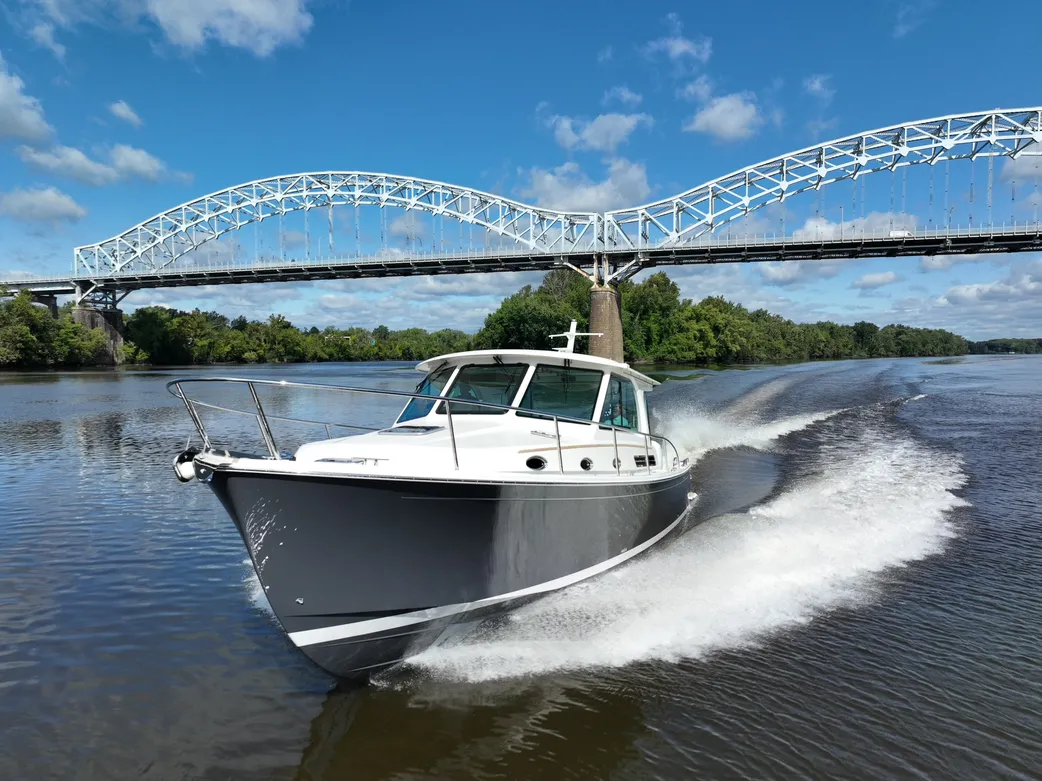
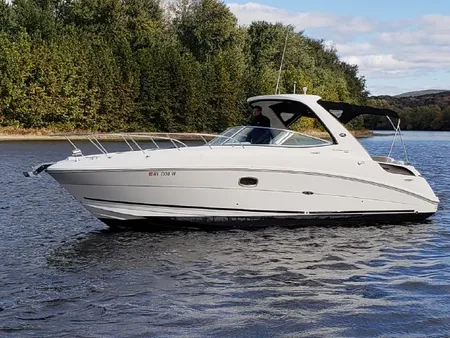
Cabin cruisers and downeast-style boats can still be fuel-conscious, especially when operated at the right speed.
Larger displacement hulls are often designed to cruise efficiently at lower speeds, making them ideal for longer trips with fewer stops. The key is resisting the urge to push too hard. Smooth, consistent cruising is more efficient (and more relaxing) than racing to your next waypoint.
Boating Habits That Reduce Fuel Consumption
No matter what boat you own, your fuel habits can make a major difference. Here are a few things we always remind our customers:
Cruise smart. Find your boat’s most efficient cruising RPM (often around 60–75% of max).
Avoid idling too long. Extended idle times quietly burn through fuel.
Manage your load. Every extra cooler, gear bag, or person affects weight and fuel use.
Plan routes. Efficient trips minimize backtracking and avoid fighting current unnecessarily.
Stay on top of maintenance. A fouled prop or dirty hull can kill fuel economy fast.
Fuel Efficiency vs. Performance: Finding the Right Balance
It’s easy to chase the most fuel-efficient option. But it’s more important to buy a boat that fits how you actually plan to use it.
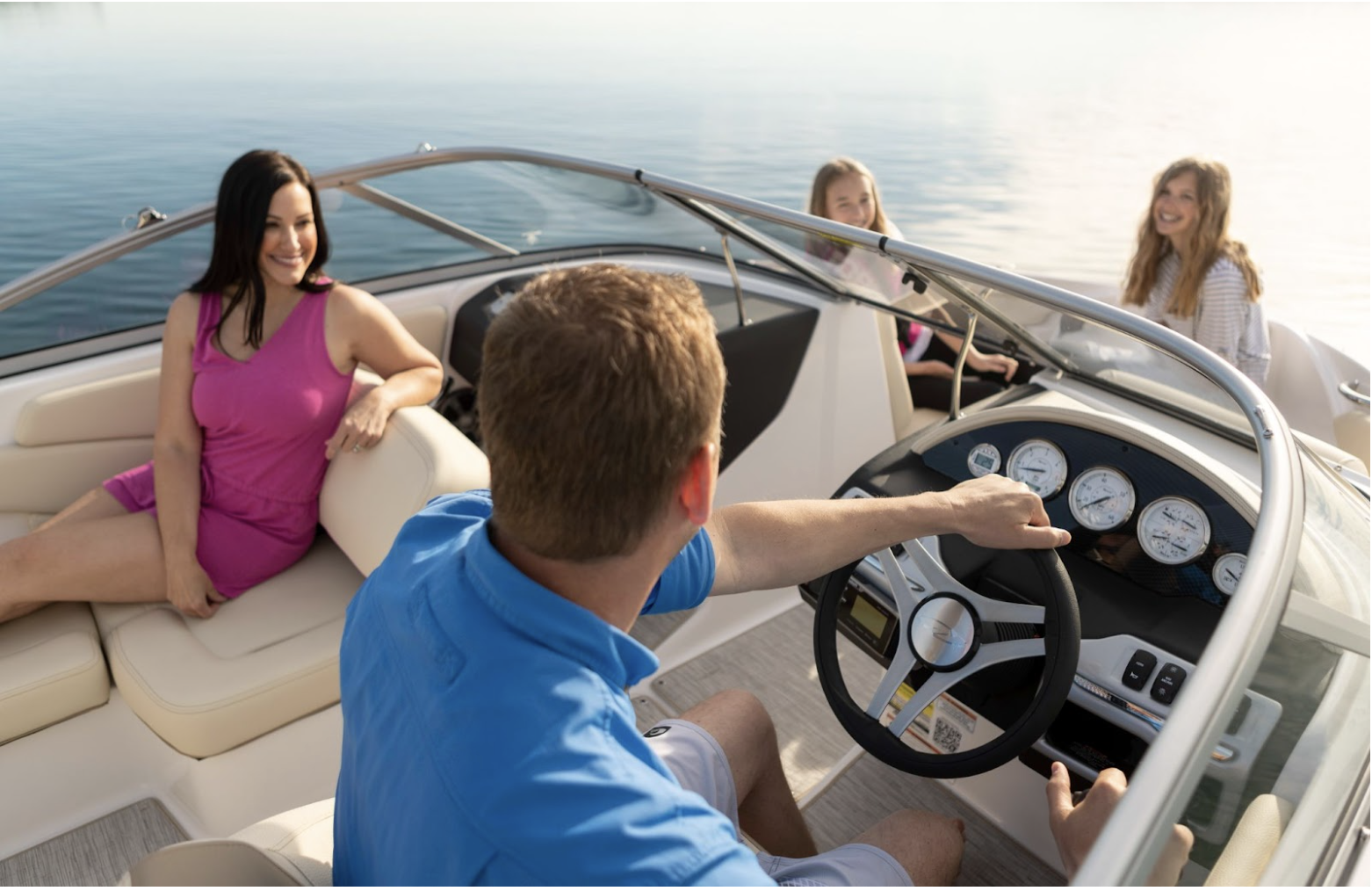
Maybe you're okay cruising slowly with the family and saving on gas. Or maybe you want a boat that can get offshore quickly when the bite is hot, even if it burns more fuel. Either way, there’s no right answer across the board.
The key is to be realistic about your speed preferences, trip lengths, and how often you’ll be out. That way, you’re not disappointed or surprised when fuel bills start adding up, or when your boat can’t go as far as you hoped.
New vs. Pre-Owned Boats and Fuel Efficiency
A new boat with the latest engine tech might be the most efficient on paper, but that doesn’t mean every pre-owned boat is behind the curve.
Well-maintained used boats with clean hulls, tuned engines, and properly sized props can perform nearly as well (and in some cases, better) than a newer model that hasn’t been cared for.
At Petzold’s, we inspect every pre-owned boat we list, and we’re upfront about how it performs in the real world. If efficiency is important to you, we’ll help compare boats based on actual usage, not just manufacturer claims.
Environmental Benefits of Fuel-Efficient Boating
Fuel-efficient boats also tread more lightly on the waterways we all enjoy.
Lower fuel consumption means:
Fewer emissions
Less frequent fueling and transport
Reduced engine wear and maintenance
It’s a small shift that adds up over time, especially when practiced across hundreds or thousands of boaters. As more of us prioritize responsible boating, choosing a fuel-efficient vessel (and operating it wisely) becomes part of taking care of the environment we love to spend time in.
Common Questions from Boat Buyers
What is the optimal speed to drive a boat?
Most boats achieve peak fuel efficiency between 60–75% of their maximum RPM. Every boat has a slightly different sweet spot, depending on hull and engine.
Do boats get good gas mileage?
Compared to cars, boats generally burn more fuel, but smart habits and modern technology can improve efficiency significantly.
What kind of fuel does my boat use?
Most recreational boats use gasoline, but some larger cruisers or diesel-powered yachts use diesel. Always refer to the manufacturer’s specs.
Choose a Fuel-Efficient Boat That Fits Your Lifestyle
Still not sure which type of boat makes the most sense for how you like to be on the water? We can help.
At Petzold’s Marine Center, our team works with buyers across Connecticut and Rhode Island to find boats that match real usage, fuel expectations, and long-term value.
You can start by browsing our selection of new boats, used boats, or reach out with questions. Whether you're cruising, fishing, or just spending more time with family, we’ll help you find a boat that keeps fuel stops to a minimum and the good times rolling.

_(1)_1759948060160.jpg?w=450&format=webp)
_1764614320068.jpg?w=450&format=webp)
_1768498998928.jpg?w=450&format=webp)
_1767773851727.webp?w=450&format=webp)
_1768330537507.jpg?w=450&format=webp)
_1770912535409.png?w=450&format=webp)
_1770994690031.png?w=450&format=webp)
_1773693060881.png?w=450&format=webp)